
Critical Minerals
Rare-earth mineralization, speciation and separation for resource recovery.
Focus areas
Hydrothermal chemistry · Rare-earth recovery · Molecular complexes
We study lanthanide and actinide materials for nuclear energy and heavy element chemistry. Our multi-scale thermodynamics connects experiments, atomistic modeling, and data science to understand materials stability and transformations.
Our approach combines:
Rare-earth mineralization, speciation and separation for resource recovery.
Hydrothermal chemistry · Rare-earth recovery · Molecular complexes

Thermochemistry, bonding and degradation of oxide, carbide and nitride fuels.
Fuel thermochemistry · Defect chemistry · Thermal expansion

Mixing, structure and thermophysical properties of salts for nuclear energy.
Calorimetry · Salt mixtures · Molecular simulation

How heat, pressure and chemical environments transform complex materials.
High-temperature diffraction · Pressure-induced transitions · Complex ceramics

Modeling defects, transport and materials evolution under irradiation.
Defect thermodynamics · Fission products · Cluster dynamics

Bonding, speciation and selective separation of actinides and lanthanides.
Molecular complexes · Electronic structure · Separation chemistry

Durable ceramics and minerals for immobilizing radioactive elements.
Actinide silicates · Phosphates · Phase stability

Connect experiments, atomistic modeling and AI to predict materials behavior.
Calorimetry and diffraction · Atomistic simulation · Thermodynamic modeling · AI and machine learning
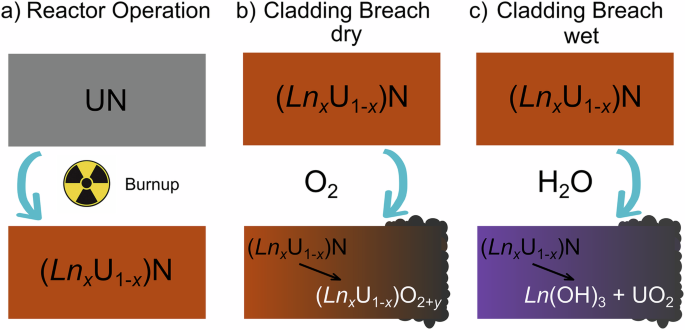
Pascal Uhlemann, Will Vance, and collaborators at Forschungszentrum Jülich investigate how binary lanthanide nitrides form and oxidize at high temperatures. The work informs questions about the stability of uranium-nitride nuclear fuels.
Read more →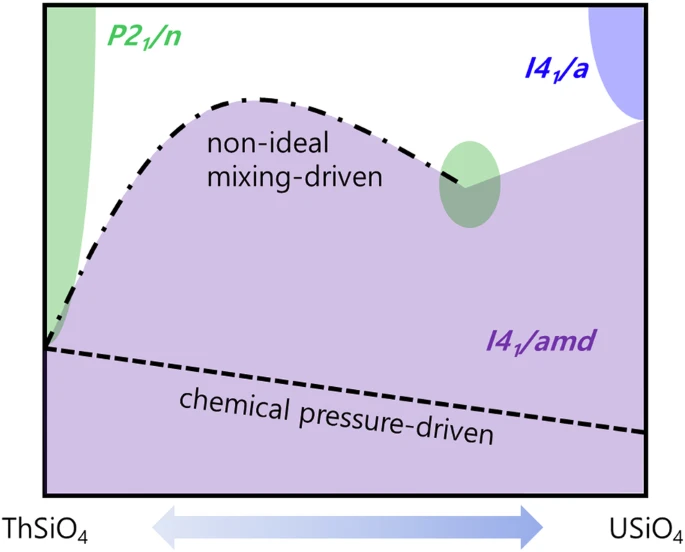
Shinhyo Bang combines high-pressure diffraction and thermodynamic modeling to study uranium–thorium silicates. The work shows how non-ideal mixing can reverse expected trends in transition pressure, connecting composition with pressure-driven phase changes.
Read more →
Will Vance receives support through DOE’s Office of Science Graduate Student Research program to work with SNS scientists at ORNL. His project combines MLIP–RMC modeling with the study of uranium fuel systems.
Read more →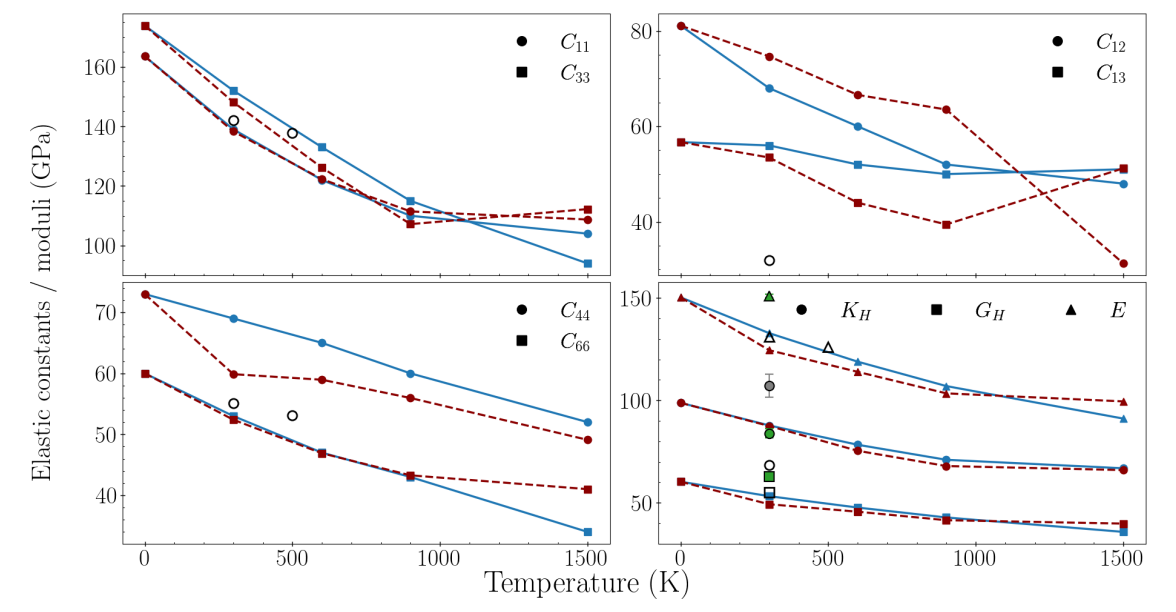
Guo group involvement in Edoardo Brando’s study links U₃Si₂ elasticity measurements to anisotropy and porosity, with thermal softening captured by DFT+U. Collaborators include Johann Bouchet, Marjorie Bertolus (CEA), and Aloïs Castellano (Liège).
Read more →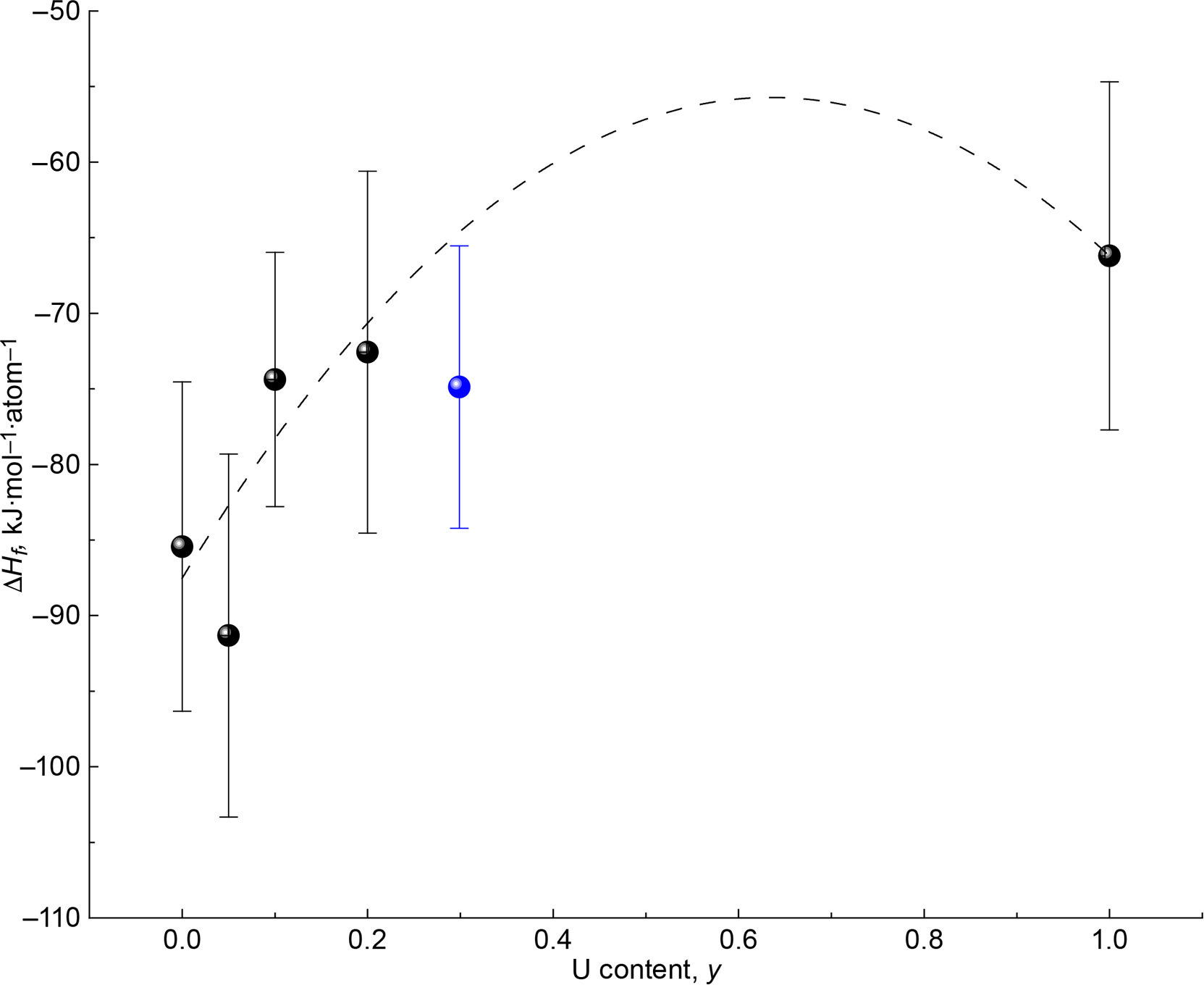
Shinhyo Bang contributes to a calorimetry study of how uranium and oxygen affect uranium–zirconium carbide stability. Gustavo Costa (NASA Glenn) leads the collaboration with Theodore Besmann (South Carolina) and colleagues at LANL.
Read more →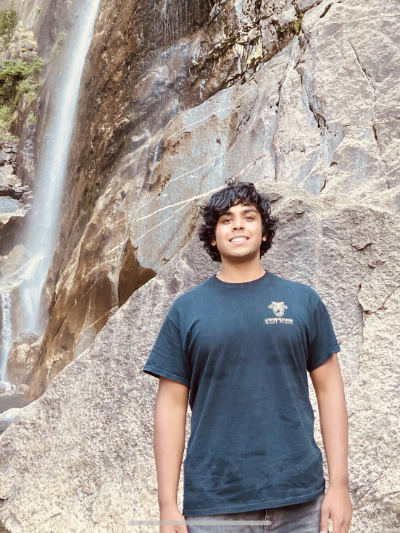
Bhargav Iyer is named a 2026 WSU Top Ten Senior for Campus Involvement. The recognition celebrates his student leadership alongside molten-salt waste vitrification research with the Guo group and collaborators at PNNL.
Read more →
We are partnered with the Wu Lab in the Gene and Linda Voiland School of Chemical Engineering and Bioengineering, the Institute of Materials Research, and Nuclear Science Center.